
Why I Support ALTO High Speed Rail for Canada
The current round of public consultations for ALTO closes on April 24. That deadline matters, but for me, the bigger point is what ALTO represents.
If you have read anything else I have written here, this probably will not come as a surprise: I believe infrastructure decisions shape far more than movement alone. They shape how cities relate to one another, how people access opportunity, how regions grow, and what kind of future a country is willing to build.
That is why I stand for ALTO.
Why this matters
I support ALTO because I believe Canada needs to build again. Not just study major infrastructure for another decade, but deliver it.
That belief is not rooted in empty optimism. It is rooted in the same conviction behind much of my writing here: delay is not neutral, hesitation has a cost, and systems only matter if they are built to serve people well.
High-speed rail in the Québec to Toronto corridor is not a luxury project. It is a rational response to one of the most important urban and economic corridors in the country. It reflects the scale of the region, the concentration of people and institutions within it, and the reality that better connections between major cities create real public value.
For me, the value of high-speed rail is not only economic or environmental. It is also human. It is about making it easier for people to work in one city and live in another, for families to see each other more often, and for students, workers, researchers, and businesses to move more easily across the corridor. It is about regions feeling closer, not just in theory, but in daily life. That matters because infrastructure is never just functional. It shapes lived experience.
And despite how projects like this are often framed, ALTO is not a leap of faith. High-speed rail is proven infrastructure. Countries around the world have demonstrated what dedicated passenger rail can do when it is built with seriousness: stronger regional ties, more reliable mobility, better alternatives to short-haul flights and long highway trips, and a transportation system designed around people rather than inherited constraints.
Canada has studied high-speed rail for decades. The case is no longer theoretical. The question now is whether we are prepared to move from discussion to delivery.
The cost of not building
That question matters to me because the status quo is not neutral. Choosing not to build modern infrastructure is a choice, one that means accepting weaker connections, more delay, more fragmentation, and a lower level of ambition than what Canada is capable of.
It also means accepting the real cost of waiting, something I have written about before in The Cost of Waiting. ALTO fits into that same pattern. This is not a story of a project appearing too quickly. If anything, it is a story of a country taking too long to act on something it has already studied, debated, and revisited for generations.
That longer pattern matters. Too often in Canada, we approach infrastructure as a one-off exercise instead of a sustained public capacity, which is part of what I was getting at in Stop Buying TBMs Like They’re Disposable. We do not just lose time when we hesitate. We lose expertise, continuity, and confidence in our ability to deliver.
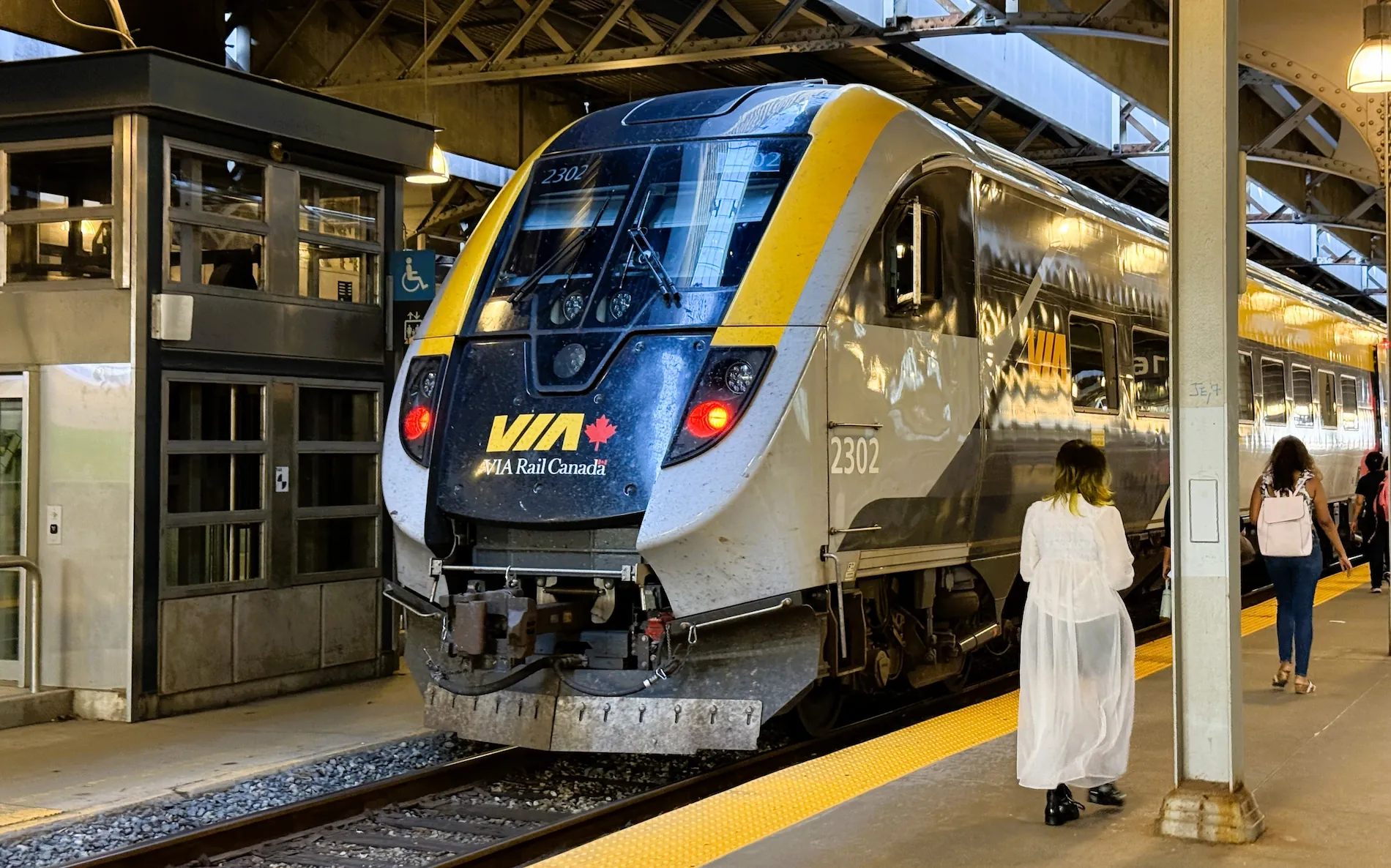
That does not mean scrutiny should disappear. Questions about cost, scope, governance, environmental integration, and delivery are real. They matter. But they are questions about how to do this well, not reasons to avoid doing it at all. There is a difference between serious oversight and reflexive hesitation. One improves projects. The other slowly erodes a country’s ability to build them.
And as with any major project, delivery is not just about approval or announcement. It is about whether institutions are prepared to carry ambition through to execution and long-term operation, something I have also explored in Delivery Doesn’t End at the Ribbon Cutting.
Why I am speaking up now
At Rail Fans Canada, we have chosen to engage proactively and honestly with the project. We believe that our work can help inform and educate people about the project, its benefits and impacts. In the same way we have documented the O-Train, REM, VIA Rail and other projects throughout Canada, ALTO will be transformative.
Earlier this month, we submitted a detailed brief as part of the consultation. It reflects years of coverage and analysis of passenger rail in Canada, and focuses on the conditions needed to make high-speed rail successful: reliability, frequency, integration, and long-term planning.
We also attended an ALTO open house in Ottawa to better understand how the project is being presented and planned. We documented that visit in a full walkthrough covering route planning, engineering, environmental studies, and timelines.
Public support matters, and I believe that threshold has already been met. The loudest voices should not have a veto over every decision. What matters now is whether we choose to act on that support, or keep doing what Canada too often does with major infrastructure: study, defer, narrow, dilute, and postpone.
In that sense, ALTO is not just about building a faster train. It is about whether Canada is still capable of building ambitious public infrastructure with confidence, discipline, and long-term purpose. It is about whether we can connect vision to delivery. It is about whether we are willing to build systems that do more than function, and instead meaningfully shape what comes next.
I support ALTO because at some point, the question stops being whether the case exists, and becomes whether we are prepared to act on it.
If you support high-speed rail in Canada, this is the moment to say so.
You can complete the survey, contribute to the interactive map, or submit a brief through ALTO’s consultation platform. The platform closes on April 24, 2026, but engagement cannot stop then. Support needs to be organized, focus on real impacts and, most of all, not stoop down to the level of critics.
If you want to go further, reach out to journalists, Members of Parliament, ministers, and local representatives. Projects of this scale move when public support is visible.
Maybe that is the deeper point behind all of this, and behind The Time to Start Building: at some point, the question is no longer whether the case exists. It is whether we are prepared to act on it.
This is one of those moments.
Let’s build systems that people can trust.
I’m interested in the intersection of infrastructure, governance, delivery, and public understanding: the systems that shape whether institutions can follow through on ambitious ideas.
My work spans operational delivery, public analysis, infrastructure literacy, and strategic communication. Whether the conversation is about major projects, institutional execution, public trust, or explaining complex systems clearly, I’m always interested in thoughtful collaboration.
If you are hiring, researching, building, reporting, or looking for a systems-oriented perspective, let’s connect.